What To Check Before A Dog Friendly Pub Walk With Sensible Route Notes
A practical step-by-step guide to what to check before a dog-friendly pub walk with sensible route notes, including preparation, instructions, common issues, tips, and next steps.
What To Check Before A Dog Friendly Pub Walk With Sensible Route Notes
Before setting off on a dog-friendly pub walk, you need to prepare your dog, plan the route, check the pub's dog policy, and pack essential supplies. This guide covers everything from fitness checks and lead training to navigation, weather planning, and pub etiquette, ensuring a safe and enjoyable outing for you and your canine companion.
Fast Answer
- Confirm the pub welcomes dogs and note any specific rules, such as where dogs are allowed inside and whether they must be kept on a lead.
- Check the weather forecast, walk difficulty, and your dog's fitness level, and plan for rest stops and water breaks along the route.
Before You Start
- Check your dog's health and fitness: ensure they are up to date on vaccinations, flea and worm treatments, and have no signs of illness or lameness.
- Review the pub's dog policy by visiting their website or calling ahead to ask about dog-friendly areas, water bowls, and any restrictions on size or breed.
- Plan the route for length, terrain, and accessibility, and note any stiles, livestock fields, or busy roads you may encounter.
- Pack a dog walker's kit: water, collapsible bowl, towel, poop bags, first aid supplies, and a spare lead or harness.
Step-by-Step Instructions
Assess Your Dog's Fitness and Health
Begin by evaluating your dog's current fitness level. A short daily walk of 20 minutes is a baseline for many dogs, but working breeds or high-energy dogs may need more. Check that your dog can comfortably walk the planned distance, climb stiles, and navigate uneven ground. Look for signs of illness or injury, such as limping, excessive panting, or reluctance to move. If your dog is a brachycephalic breed like a bulldog, avoid strenuous exercise in warm weather. Ensure vaccinations are up to date and that your dog is protected against parasites like ticks, which are common in grassy or wooded areas. If your dog is on any medication, carry a dose with you. This fitness check prevents overexertion and reduces the risk of injury or heatstroke during the walk.
Confirm the Pub's Dog-Friendly Policy
Contact the pub directly to confirm that dogs are welcome. Some pubs allow dogs only in the bar or outdoor seating areas, while others may have restrictions during meal times. Inquire about specific rules: must dogs be on a lead at all times, or are they allowed to roam in a designated area? Check if water bowls are provided, and if not, plan to bring your own. Ask about any entry fees or facilities for dogs, such as a boot wash or dog treats. Also, ask if there is a quiet corner where your dog can settle if they are nervous. Knowing these details in advance ensures you are not caught unaware, and you can choose a table where your dog will be comfortable and not in the way of serving staff. This preparation makes the visit enjoyable for both you and your dog.
Plan the Route with Sensible Waypoints
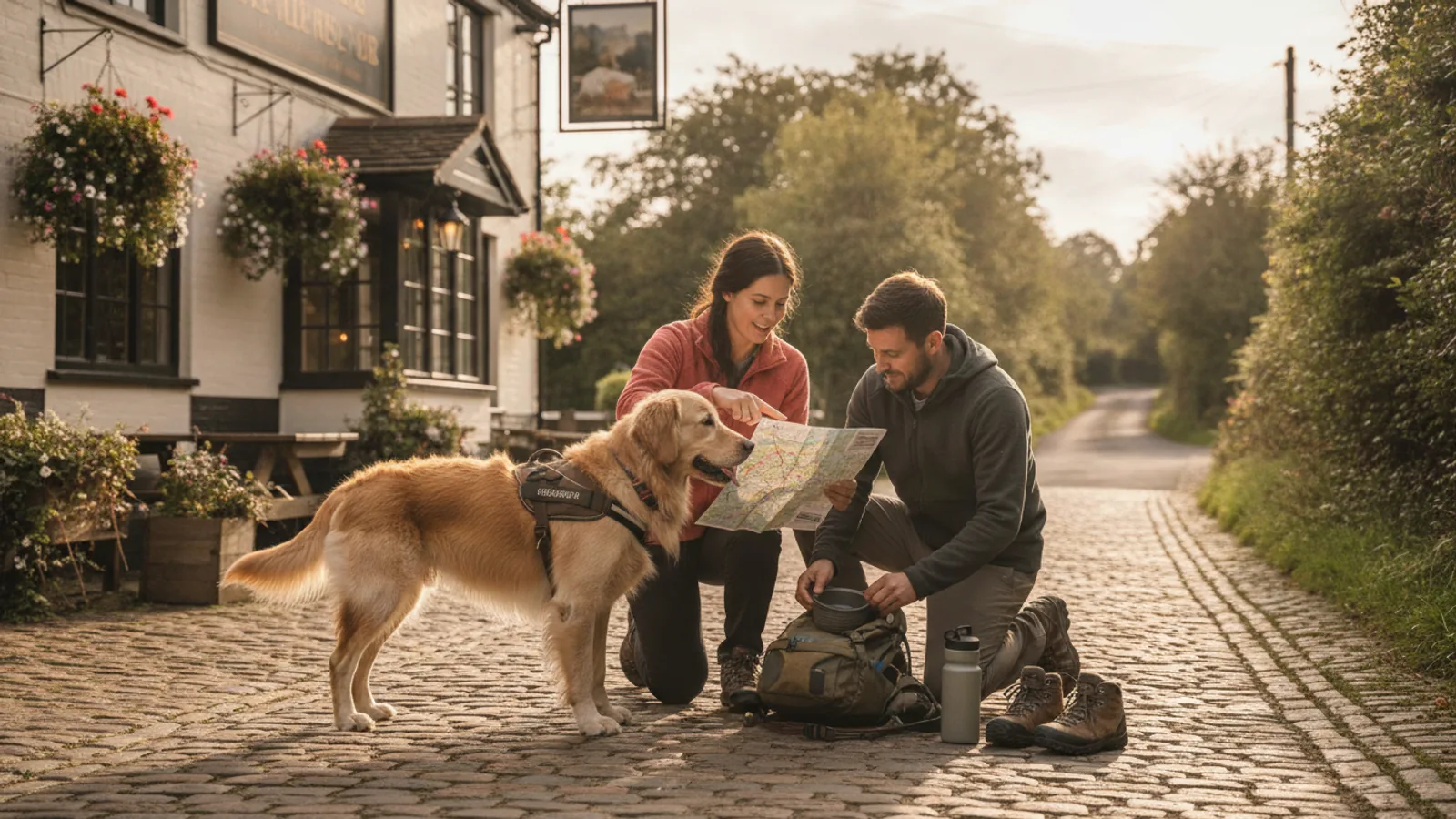
Choose a route that is appropriate for your dog's fitness and your own ability. Look for a circular path of, say, 3 to 5 miles, with options to shorten if needed. Use an ordnance survey map or a reliable walking app to identify the route, but also read recent walk reports to check for obstacles like fallen trees, flooding, or temporary path closures. Plan a midpoint for a short rest, ideally near a stream or under shade on a warm day. Identify stiles, gates, and roads: ensure you can lift your dog over stiles if they cannot climb, and plan to cross roads at safe points. Also, note the location of the pub to ensure it is close to the end of your walk, so your dog is not exhausted when you arrive. This waypoint planning keeps the walk safe and enjoyable, and it lets you adapt the plan if need be.
Pack a Complete Dog Walking Kit
Assemble a lightweight backpack with items to keep your dog comfortable and safe. Always carry a water bottle and a collapsible bowl, offering water every 30 minutes of activity. Pack plenty of poop bags, a towel to dry muddy paws, and a small first aid kit that includes sterile wipes, a bandage, and tweezers for removing ticks. Include a spare lead and a harness in case the original breaks or you need to secure your dog temporarily. On a sunny day, add pet-safe sunscreen for exposed areas, especially on light-coloured noses and ears. In cooler weather, a dog coat may be prudent, especially for short-haired breeds. Also, pack a small snack for your dog, such as biscuits, to reward calm behaviour at the pub. Having these supplies means you can handle common incidents and enjoy the walk without worrying.
Check the Weather and Time of Day
Review the weather forecast for the full period of your walk and your time at the pub. Avoid walking in extreme heat, as dogs can overheat, especially on tarmac that can burn their paws. Aim for early morning or late afternoon in summer. In winter, consider the fading daylight: plan to return before dusk, and carry a torch if there is any chance of walking in the dark. Similarly, strong winds can make walking uncomfortable, and rain can make paths slippery or muddy. Also, check the air quality index if you are in a city, as poor air quality can harm your dog's lungs. By checking the weather, you can choose the right time, dress appropriately, and adjust your route – for example, picking a wooded path for shade on a sunny day. This reduces weather-related risks and increases comfort.
Prepare Your Dog for Pub Etiquette
Before entering the pub, give your dog a short 'settle' practice at home. Train them to lie down on a mat or a towel you will bring, and reward them for calm behaviour. At the pub, choose a table away from busy walkways and kitchen doors. Keep the lead attached, or use a short house line so you can quickly grab it if needed. Let your dog sniff the area under the table, but discourage them from greeting other customers without asking. Also, ensure your dog has access to water, and do not feed them human food without checking with staff if it is allowed. Always clean up any mess: if your dog has an accident, ask staff for cleaning materials. This preparation shows respect for other pub patrons and staff, and it helps your dog feel secure, reducing the chance of barking or whining.
Quick Reference
| Situation | Action | Why it helps |
|---|---|---|
| You see cattle or sheep in a field that you are about to cross. | Stop, check your route: if possible, walk around the field using a different path, otherwise wait at the gate for a safe moment, then keep your dog on a short lead and walk quietly and steadily along the edge, avoiding disturbing the animals. | Livestock may react aggressively to an unfamiliar dog, especially if the dog approaches or barks. Staying on the edge and keeping the dog close protects both the animals and your dog. |
| Your dog suddenly starts limping during the walk. | Stop immediately, ask your dog to sit, and gently examine the affected limb for cuts, swelling, or a broken nail. If a small cut, clean the wound with an antiseptic wipe and wrap with a bandage, then walk back slowly. For severe pain or swelling, end the walk and seek veterinary care. | Continuing to walk on an injured leg can worsen the injury. Early intervention can prevent further damage and help you decide whether an emergency vet visit is needed. |
| There is a stile or gate that your dog cannot climb over. | Look for a bypass gate or dog gate nearby. If none, lift your dog over carefully: for a small dog, pick them up, for a larger dog, use a safe lifting technique. Alternatively, find a suitable gap in the fence or an alternative route around, but never leave your dog unattended while you climb. | Lifting a dog over a stile, if done correctly, is safe for both of you, and avoids the risk of your dog getting stuck or injured. Knowing your dog's ability helps you plan the route. |
Common Issues
- Your dog refuses to walk or drags behind on the lead.: Stop and check for signs of discomfort: check their paws for cuts, stones, or ice, and feel their body temperature. Offer water and a short rest. If they are still unwilling, shorten the walk and consider a tired or anxious dog. Sometimes a bright spot or a new route can encourage them, but never force them to walk if they are genuinely distressed.
- Your dog drinks from a puddle or muddy stream during the walk.: Gently discourage the habit by regularly offering clean water from your bottle. If they do drink from a puddle, watch for signs of illness in the next 24 hours, such as vomiting or lethargy. Consider using a long lead to control them near water, and teach a 'leave it' command. Always have fresh water available.
- Your dog gets overexcited when other dogs approach on the trail.: Keep your distance and ask your dog to sit and focus on you. Use high-value treats to reward calm behaviour. If your dog is reactive, consider a 'friendly dog' bandana or lead sleeve, but ultimately, manage the situation by choosing quieter walking times or different routes. Always ask other owners before allowing your dogs to greet.
Advanced Tips
- Encourage your dog to walk to heel on a loose lead, especially near roads, by using a harness with a front clip that gently steers them; practice in a low-distraction area before the trip.
- If your dog is comfortable, allow them to swim only in safe, clean water with a gentle entry and exit, and avoid deep fast-flowing rivers; rinse them off afterwards to remove bacteria or algae.
- Train your dog to use a 'settle' command at home so that they automatically lie down quietly when they hear a cue, which is invaluable in a pub setting.
Final Checklist
- Have I confirmed the pub's dog policy and the specific areas where dogs are allowed?
- Have I packed water, a bowl, poop bags, a towel, and a first aid kit for my dog?
- Have I checked the weather forecast and adjusted the walk timing and route accordingly?
- Have I attached a current ID tag to my dog's collar and ensured they are microchipped? (UK law requires a microchip)
FAQ
Can I take my puppy to a pub immediately after their vaccinations?
Wait until your puppy has completed their full vaccination course, usually around 12 to 16 weeks of age, and then ask your vet for clearance. Start with short walks in quiet areas to build their confidence. Before that, you can take them to a pub, but carry them or keep them on a lead and avoid letting them on the floor in public places if there is any risk of disease.
What should I do if my dog becomes anxious or barks excessively in the pub?
First, try to calm them by speaking softly and offering a treat for quiet behaviour. Move to a quieter table, or go outside to sit. If the pub has a designated dog area, relocate there. If your dog continues to bark and you cannot settle them, it is best to take them outside for a break or end your visit and drive home. Never shout or punish, as this can increase anxiety.
Are there any dog-friendly pubs that also offer food for dogs?
Some pubs do offer a dog menu, but this is not universal. You can ask when you call to check the policy. If they do not have dog treats, you can bring your own, but always ask permission before feeding your dog human food, as ingredients may be unsafe for pets. Plain, cooked chicken or rice are usually safe, but avoid anything with onions, garlic, or chocolate.