A Dog Friendly Pub Walk With Sensible Route Notes Checklist For First Time Readers
A practical step-by-step guide to a dog-friendly pub walk with sensible route notes checklist for first-time readers, including preparation, instructions, common issues, tips, and next steps.
A Dog Friendly Pub Walk With Sensible Route Notes Checklist For First Time Readers
This guide gives complete, practical steps for a first-time dog owner to plan and enjoy a pub walk: a route that includes a dog-friendly pub. It covers choosing a safe route and a welcoming pub, preparing your dog and your gear, managing the walk itself, and following pub etiquette. The focus is on sensible route notes and a clear checklist so you and your dog have a relaxed, positive experience. You will learn what to check before you go, what to bring, how to keep your dog safe and under control, and how to behave at the pub. The advice is calm and practical, designed to help you avoid common problems and feel confident, even if this is your first time.
Fast Answer
- Choose a route that is a loop (not an out-and-back) and that is within your dog's fitness level, checking the terrain and distance beforehand.
- Call the pub ahead to confirm they allow dogs, and ask about where you can sit, whether they provide water, and any rules for dogs.
Before You Start
- Check the weather forecast before you set out, and adjust your plans: avoid very hot days, and bring waterproof gear for rain.
- Measure the route distance with an online tool or app, and plan for slow-paced walking with plenty of rest breaks.
- Ensure your dog's ID tag is attached to a secure collar or harness, and that your contact details are up to date.
- Pack a small bag with water, a collapsible bowl, poop bags, a towel, a lead, and a few treats or a chew toy.
Step-by-Step Instructions
Plan a Safe and Dog-Friendly Route
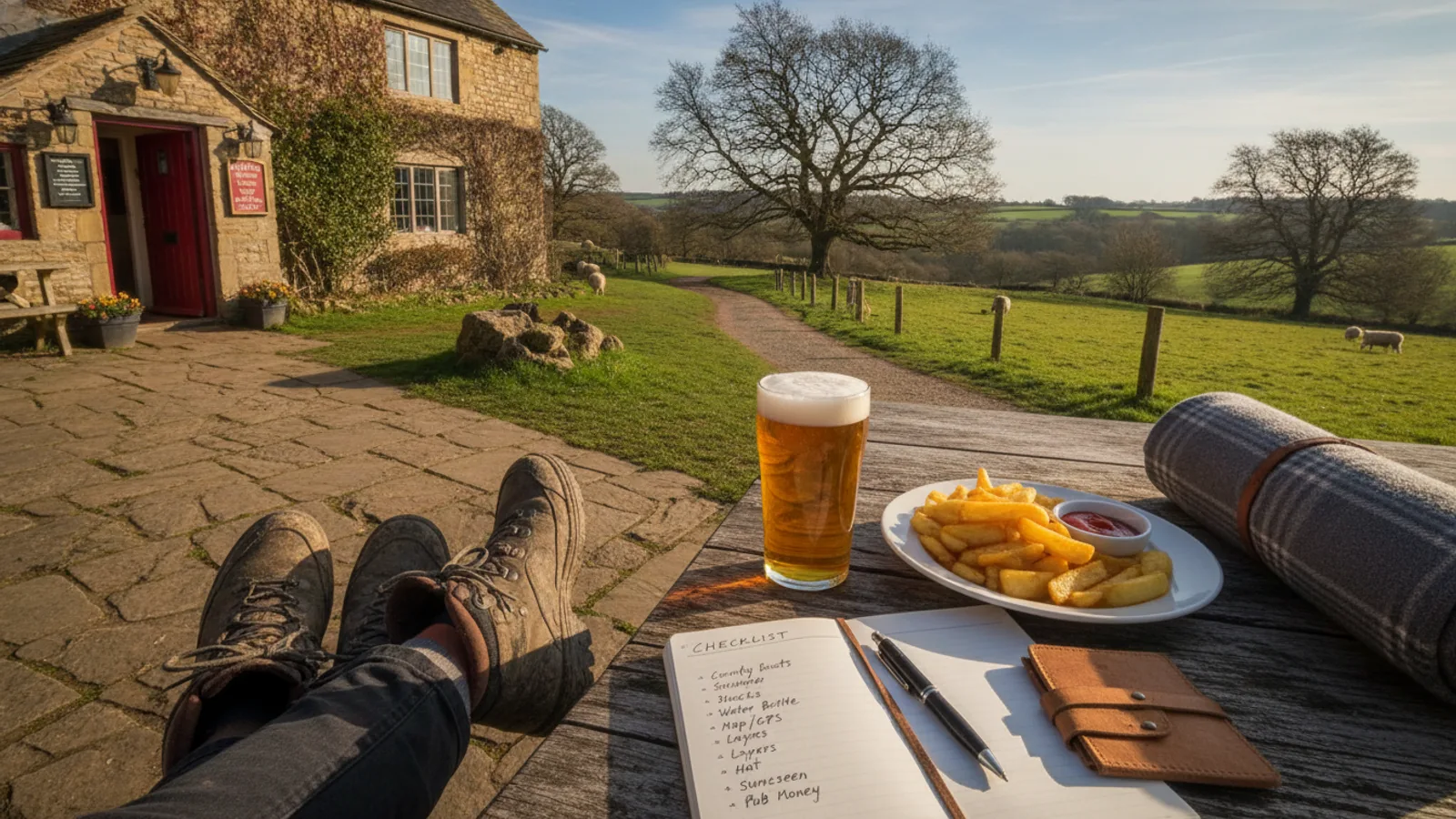
First, choose a route that is a loop so you do not have to backtrack, and that is appropriate for your dog's age and fitness. Look for paths with firm, even ground to avoid paw injuries, and consider whether there are stiles or gates that might be difficult. Check the route length: a good starting distance for a healthy adult dog is two to three miles, but reduce it for puppies, senior dogs, or brachycephalic breeds. Use a local walking map or a reputable walking website to find a route that is known to be dog-friendly, and print or download the map to your phone. Before you leave, walk a short section of the route if possible to check for hazards like broken glass or aggressive livestock. Also, note where the pub is along the route: ideally, it should be at the halfway point so you can stop for a rest. Finally, tell a friend or family member which route you are taking and what time you expect to return, just as a safety measure. This planning step prevents you from getting lost and ensures your dog is not overexerted.
Choose a Welcoming Pub
Before setting out, spend time finding a pub that genuinely welcomes dogs, because not all do. Start by searching online for 'dog-friendly pubs' in your area, but read the details carefully because some pubs only allow dogs in the garden or a specific bar. For the most accurate information, call the pub directly and ask three questions: Do you allow dogs inside? Is there a designated dog seating area? Can I bring water for my dog? Also ask if they have a dog water bowl and perhaps provide dog treats. Listen for a friendly tone; a pub that sounds enthusiastic is more likely to be truly dog-friendly. If you are booking a table, mention you have a dog and ask them to reserve a corner spot, which is less stressful for your dog. Check their opening hours and whether they serve food all day, because you might want to sit down after a long walk. Also, read recent reviews from other dog owners to see how the staff treat dogs. A pub that has a secure garden is a bonus, but you should not allow your dog off lead without permission. This upfront research avoids the embarrassment of being turned away.
Prepare Your Dog and Essentials
Before the walk, get your dog ready. Start by giving your dog a chance to eliminate in your garden, and then brush them if they have a thick coat to reduce shedding. Put on a well-fitting collar or harness: a harness gives you more control and is safer for dogs that pull. Attach the ID tag and clip the lead. Your dog should already be comfortable wearing the collar and lead, but if you have a new puppy, practice walking indoors. Pack a small day bag with the following: a bottle of fresh water (at least enough for two hours), a collapsible bowl, at least three poop bags, a towel to dry your dog if it rains or if they get muddy, and a small pouch of your dog's favorite treats. If your dog is anxious in new places, bring a familiar toy or a blanket that smells like home. Also, carry your own water and a snack for yourself, and ensure you have a working phone with the route map downloaded for offline use. Do not forget any medication your dog needs, and if you are unsure about anything, consult your veterinarian before the walk. Proper gear prevents most problems on the trail.
Follow Good Walking Etiquette
During the walk, keep your dog on a lead, especially on narrow paths, near roads, or where livestock might be present. A standard six-foot lead is a good length for control, but you can use a long lead in open spaces if you have trained a reliable recall. When you meet other walkers, shorten your lead and move to the side, and ask if their dog is friendly before allowing contact. Do not let your dog greet every dog you pass; some dogs are reactive, and a negative encounter can ruin your day. Keep an eye on your dog for signs of fatigue, such as slowing down, panting heavily, or lagging behind, and stop for a break every twenty minutes. Offer water little and often, rather than a large amount at once. Also, be mindful of the ground: hot pavement can burn paws, and icy patches are slippery. As you approach the pub, give your dog a five-minute rest and wipe their paws with your towel to remove mud. This keeps your dog calm and welcome in the pub. Good etiquette benefits everyone.
Settle Your Dog at the Pub
When you arrive at the pub, enter calmly and find a table in the designated dog area. Before sitting, look for hazards: there may be hot drinks on tables, or fellow diners who are not comfortable with dogs. Place your dog in a 'down' position on the floor next to your chair, and give them a chew or a puzzle toy to keep them occupied. Do not let your dog sit on the furniture, as that is generally not allowed, and do not let them wander around the pub. Some dogs settle better under a table; that is fine as long as you can still see them. Offer water in your collapsible bowl, and ask a staff member if they have a water bowl you can use. If your dog is restless, take them outside for a short break, but never leave them tied up alone. When you order food, be aware that some menu items contain ingredients that are toxic to dogs, such as onions or chocolate, so do not share your meal unless you are certain it is safe. Keep your dog at your feet and reward calm behavior with a treat. A settled dog makes a good impression.
End the Day with a Smooth Goodbye
After you have finished your refreshment, prepare to leave the pub calmly. Do not rush, as that may excite your dog. First, give your dog a final opportunity to eliminate in a designated outdoor area, and clean up any mess. If your dog drank a lot of water, plan a short, slow walk back to the car or home so they do not get an upset stomach. On the return journey, keep the lead on and continue to be alert to hazards, and if the weather has changed, adjust your pace accordingly. When you get home, give your dog a bowl of fresh water, wipe their paws, and check for ticks, in the ears, between the toes, and around the neck. Brush your dog to remove any dirt or burrs from their coat. Then, give them a quiet place to rest, as they may be tired. Finally, reflect on the walk: what went well, and what could be improved? Note any issues in your phone, such as a difficult stile or a noisy pub, so you remember for next time. A calm end ensures a positive memory.
Quick Reference
| Situation | Action | Why it helps |
|---|---|---|
| You are planning a pub walk and are unsure if a pub is dog-friendly. | Call the pub before you go and ask if they allow dogs inside, and if there is a designated seating area. Also ask if they provide water bowls. | This avoids the disappointment and embarrassment of being turned away, and it also gives you a chance to hear their tone and assessment of how welcoming they truly are. |
| During the walk, you encounter a herd of cows on the path. | Keep your dog on a short lead, stay calm, and walk slowly through to the other side, giving the cows a wide berth. If they approach, let go of the lead rather than put yourself at risk. | Cows can be curious and may charge if they feel threatened or if they are protecting calves. Releasing your dog gives it a chance to escape, while you focus on your own safety. |
| At the pub, your dog starts to whine and become restless under the table. | Quietly take your dog outside for a short, calming walk, even if it is just to the garden, and then retry settling. Give a chew toy and practice 'down' for a minute. | Whining is often a sign of boredom or excess energy. A brief change of scene helps your dog relax, and giving a purposeful task reinforces calm behavior in a distracting environment. |
Common Issues
- Your dog pulls constantly on the lead, making the walk unpleasant.: Practice loose-lead walking at home and during the walk, stop moving every time the lead goes tight, and reward your dog for staying close. Use a front-clip harness for extra control, and take a break to play a quick game to refocus your dog.
- Rain starts suddenly and you are caught without waterproof gear.: Check the forecast before leaving and always carry a lightweight raincoat and a waterproof cover for your pack (or use a dry bag). If you do get wet, dry off with your towel and find shelter under a tree or at the pub earlier than planned. Protect your phone in a waterproof case.
- At the pub, your dog barks at other customers or dogs.: Remove your dog from the situation immediately by taking them outside until they calm down. Practice a 'quiet' command at home, and bring a distracting toy or treat. If your dog cannot settle, it is best to leave, as persistent barking will not be tolerated.
Advanced Tips
- Use a high-visibility leash and collar if you walk near roads, even in daylight, to make you and your dog more visible to drivers and cyclists.
- Pack a small first-aid kit for your dog that includes a tick remover, tweezers, antiseptic wipes, and a pair of nitrile gloves, and know how to use them.
- Train your dog to use a 'place' command at home, then use a towel or mat at the pub to give your dog a defined and calm space.
Final Checklist
- Check that your dog has a secure collar or harness with an up-to-date ID tag.
- Pack water, a bowl, poop bags, a towel, and a chew toy in a small day bag.
- Confirm the pub's dog policy with a call, and note any specific rules about seating.
- Print or download the route map and share your plan with someone who is not walking with you.
FAQ
Can I take my puppy on a pub walk?
Yes, but keep the walk short, choose a route with smooth terrain, and carry your puppy over any obstacles that are too high. Ensure your puppy has completed its vaccinations before walking in public areas, and ask your vet for advice on safe distances. Introduce your puppy to the pub environment gradually, and always let them rest.
What should I do if my dog is anxious at the pub?
If your dog shows signs of stress, such as trembling, whining, or hiding, it is best to leave and try a quieter time. Give your dog a safe space under the table, bring a familiar toy, and practice 'down' to help them settle. For severe anxiety, desensitize by starting with a quieter pub and shorter visits.
Are there any food items at the pub that are dangerous to dogs?
Yes, avoid giving your dog anything with chocolate, onions, garlic, grapes, raisins, or xylitol (a sweetener). Even if the pub allows you to feed your dog, it is safer to bring their own treats. If you want to share your meal, ask the staff if any ingredients are toxic, but it is best not to.